

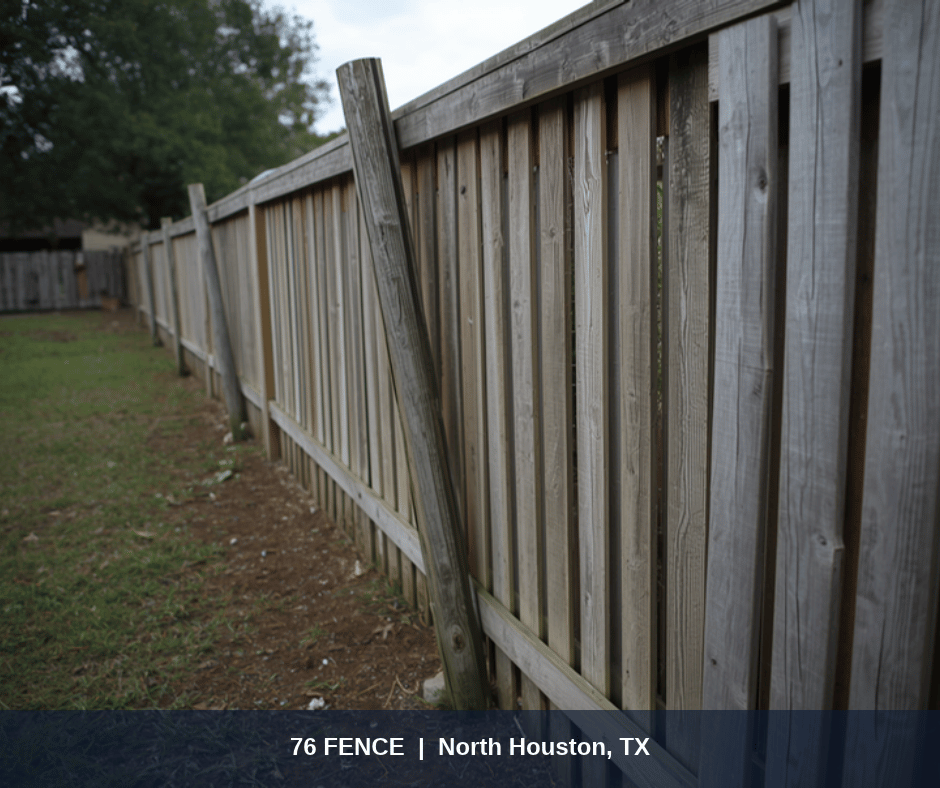
The lowest bid on a fence job can look like the easy choice, especially when quotes for the same fence line swing by thousands of dollars. In our experience across North Houston, Montgomery County, and the surrounding communities, a rock-bottom price almost always means something got cut to hit that number. Before you sign with whoever quoted the least, here are seven risks of a cheap fence installation worth knowing first.
Why the Cheapest Quote Usually Means Something Got Skipped
A fence quote is really a bet on what’s happening below ground and inside the materials, not just what you can see standing in the yard. Ground conditions change block to block in this part of Texas, storm season tests every gate and panel, and HOA rules add another layer most national price-comparison sites don’t account for. When a quote comes in well under everyone else’s, it’s worth asking which of these got left out to get there.
1. The Posts Aren’t Set for the Ground They’re In
Post depth and concrete volume are two of the easiest places to cut a bid, because the difference is invisible once the dirt goes back in the hole. A crew working to hit a low number may set every post to one generic depth regardless of what’s actually in that hole, rather than reading the ground and adjusting for it. That’s the single biggest reason a cheap fence starts leaning within a year or two instead of holding for a decade. For what a properly set post looks like in this area, see our guide to fixing a leaning fence post.
2. Lumber That Isn’t Rated for Ground Contact
Pressure-treated lumber comes in different retention levels, and only some of them are rated for ground contact. A cheap quote sometimes substitutes standard-grade boards or thinner pickets than the style calls for, which looks identical on installation day and starts failing within a couple of years in our humidity. Ask specifically what grade of lumber is being used and whether it’s rated for ground contact, not just “pressure-treated.”
3. No Permit or HOA Paperwork Pulled
Skipping the paperwork is an easy way to shave a day and a little cost off a job. But if a permit was required and wasn’t pulled, or an HOA never signed off, the homeowner is the one who ends up with a stop-work order or a letter demanding the fence come down and go back up to spec. Confirm before signing who is responsible for permits and HOA submittals, and get it in writing.
4. No Proof of Insurance
Texas doesn’t issue a state license for fence contractors, so “licensed” isn’t a meaningful claim to look for. What actually protects you is insurance, and a crew working at rock-bottom margins is more likely to be skipping General Liability or Workers’ Compensation to keep costs down. If someone gets hurt on your property and the contractor isn’t covered, that cost can land on you. Our page on being licensed and insured covers exactly what to ask for before anyone starts digging.
5. Hardware That Rusts or Fails Early
Brackets, screws, and nails are a small line item on a quote, which makes them an easy place to downgrade. Standard steel hardware instead of hot-dipped galvanized starts rusting and staining the wood within a season or two in our humidity, and thin gate hinges sag under daily use faster than heavier-duty hardware would.
6. No Bracing for Wind Load
A solid-panel wood or vinyl fence catches a lot of wind, and the post spacing and bracing that keep it standing in a strong thunderstorm or tropical system cost more labor and material to get right. A cheap quote sometimes widens post spacing or skips extra bracing on tall or solid-panel sections, which is fine on a calm day and a problem the first time a storm rolls through.
7. No Written Warranty
A fair price usually comes with a written workmanship warranty, because the installer is confident the fence will hold up. A price cut to the bone often comes with no warranty at all, or one so short it expires before the kind of problems above would even show up. Ours runs 18 months for exactly that reason.
What a Fair Quote Actually Buys You
None of this means the highest quote is automatically the right one either. It means a fair, mid-range quote is usually paying for things you can’t see on install day: properly set posts, ground-contact-rated lumber, real insurance, and a warranty behind the work. If a quote comes in dramatically lower than the others you’ve gotten, ask what got left out before you sign, not after the first post starts leaning. Book a free estimate or call 281-973-3884 and we’ll walk you through exactly what’s in ours.
